 Text: 941-666-4638
 Call: 941-666-4638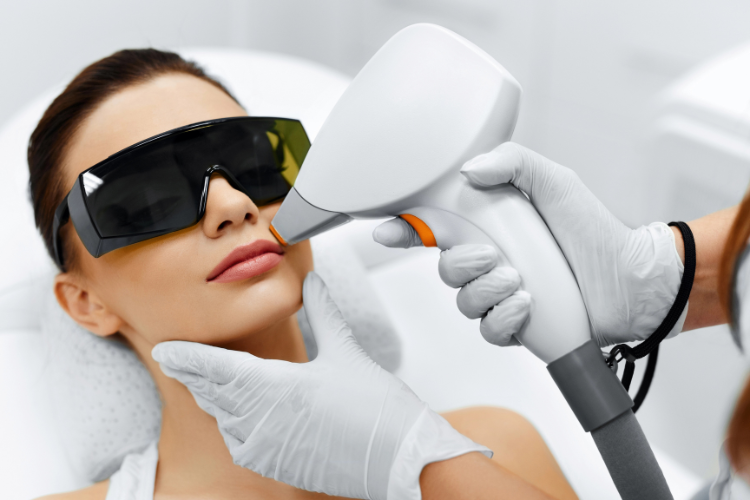
Can Laser Hair Removal Help With PCOS-Related Hair Growth?
Polycystic Ovary Syndrome (PCOS) is a complex hormonal condition that affects millions of women worldwide. Although we usually see it discussed in the context of fertility and metabolic health, many of its most distressing symptoms are, in fact, cosmetic.
Among these, PCOS hair growth, specifically the development of thick, dark hair on the face, neck, and body, is frequently cited as the symptom that most negatively impacts self-esteem and quality of life.
For women dealing with excess facial hair, the daily ritual of shaving, plucking, or waxing can feel like an endless battle. Thus, it’s not surprising that people with PCOS become interested in laser hair removal as a potentially quasi-permanent fix.
But does it work the same way when hormones are the driving force? Read on to learn more about the effectiveness of laser treatment for PCOS hair growth and what you can realistically expect from a medical spa experience.
What Is PCOS-Related Hair Growth (Hirsutism)?
In women with PCOS, the ovaries produce higher-than-normal levels of androgens, which are male hormones like testosterone.
This hormonal imbalance triggers hirsutism, a condition where terminal hair, i.e., the thick, dark, deep-rooted hair usually found on men, grows in male-pattern areas on a woman. Common areas affected include:
- The chin, jawline, and sideburn area.
- The neck and chest.
- The abdomen often has a “snail trail” or line of hair.
- The lower back and inner thighs.
PCOS-related hair behaves differently from typical body hair. Because the condition is fueled by internal hormones, the follicles are constantly being stimulated to grow. This means the hair often grows back faster and more aggressively than standard leg or underarm hair.
Why Traditional Hair Removal Methods Often Fall Short
Most women with PCOS spend years cycling through traditional hair removal methods before seeking professional help, due to:
- Shaving: Often leads to a five o’clock shadow by midday and painful razor burns.
- Waxing and Threading: While these remove hair from the root, the constant trauma to the skin can cause chronic folliculitis, ingrown hairs, and post-inflammatory hyperpigmentation (dark spots that remain long after the hair is gone).
- Depilatory Creams: These chemical treatments can be harsh on sensitive facial skin and rarely provide more than a day or two of smoothness.
For many, these methods are exhausting because they only treat the surface. They don’t address the density or speed of hormonal hair growth, which can lead to a feeling of hopelessness.
Also Read: The Top Benefits of Choosing Laser Hair Removal Over Waxing
How Laser Hair Removal Works
Laser hair removal works on the principle of selective photothermolysis. The laser emits a concentrated beam of light that is absorbed by the melanin in the hair. This light energy converts to heat, which damages the hair follicle enough to inhibit or delay future hair growth.
The process is most effective when hair is in its anagen or active growth phase. Since not all hairs are in the same phase at once, multiple treatments are required, usually 6 to 10 sessions, to catch every follicle at the right time.
While often called permanent colloquially, the FDA actually classifies it as permanent hair reduction, and this distinction is especially important for PCOS patients.
Can Laser Hair Removal Help With PCOS-Related Hair Growth?
The short answer is yes, laser hair removal can be life-changing for PCOS patients, but it requires a slightly different perspective than it does for others.
For one, laser treatment is highly effective at reducing hair density. Even if the hair isn’t 100% gone, it usually grows back much finer, lighter, and softer. For someone used to a coarse, beard-like texture on their chin, having softer peach fuzz instead is a massive victory.
The challenge with PCOS is that while the laser is destroying existing follicles, your hormones may be trying to wake up dormant ones. It works to destroy the hair currently growing, but it cannot prevent your body from potentially creating new hair follicles in the future.
And unlike a standard patient who might finish eight laser hair removal sessions and be done for years, a PCOS patient should expect to need maintenance treatments. Typically, after an initial series, a touch-up once or twice a year is necessary to stay ahead of any new hormonal stimulation.
What Results Can PCOS Patients Realistically Expect?
When you visit a medical spa, your provider should set realistic expectations. Success for PCOS hair removal is measured by:
- Slower Growth: Instead of shaving every morning, you might find you only need to address the area once every two weeks or even once a month.
- Skin Healing: Laser removal eliminates the need for daily shaving or waxing, which allows the skin to finally heal from ingrown hairs and irritation.
- Improved Texture: The skin feels smoother, and the shadow beneath the skin is eliminated.
Who Is a Good Candidate?
Because lasers target pigment, the ideal candidate traditionally had light skin and dark hair. However, modern laser technology, like the Nd: YAG laser, has made it safe and effective for patients with all skin tones.
For PCOS patients specifically, you are an excellent candidate if:
- You have dark, coarse hair.
- You are consistently managing your PCOS through lifestyle or medication.
- You are committed to a full series of treatments without skipping sessions.
Hormone Management Alongside Laser Treatments
Laser hair removal is a tool for managing the symptom, not the cause. For the best results, it is highly recommended to pair laser treatments with medical management of your PCOS.
If your androgens remain very high, the laser may feel like it’s losing against the hormones. Medications like Spironolactone or certain birth control pills can help lower androgen levels, making the laser’s job much easier.
This is why many PCOS patients see the most successful results when their endocrinologist and their aesthetician work in tandem.
Safety and Experience Matter
Treating hormonal hair growth requires expertise. Hormonal skin can sometimes be more sensitive, and there is a rare condition called paradoxical hypertrichosis where low-level laser energy can actually stimulate more hair growth if the settings aren’t correct.
This is why choosing an experienced medical spa for PCOS hair removal in Lakewood Ranch is vital. You want a provider who understands how to adjust the fluence, power, and wavelength specifically for thick, hormonally driven follicles to ensure the hair is destroyed.
Laser Hair Removal vs. Electrolysis for PCOS
You may have heard of electrolysis as the only true permanent hair removal. Here is how they compare for women with PCOS:
Laser: Is much faster and can treat large areas, such as the full face or back, in minutes. It is less painful and provides a significant reduction quickly.
Electrolysis: Treats one hair at a time with a needle. It is very slow and can be expensive for large areas, but it is effective for white, gray, or very light blonde hairs that lasers cannot target effectively.
FYI – Many PCOS patients start with laser to clear the bulk of the dark hair and then finish with electrolysis for any remaining stubborn or light-colored strands.
Is Laser Hair Removal Worth It for People with PCOS?
For the vast majority of women, laser hair removal for PCOS is absolutely worth it. While it may require more sessions and periodic maintenance than the average person, the relief from daily shaving and the restoration of confidence are priceless.
If you are tired of your skin being a constant source of stress, laser hair removal offers lasting freedom. Combining the latest laser technology with proper hormonal management can help you to finally achieve the smooth, clear skin you deserve.
Ready to reclaim your confidence? Our team specializes in treating hormonal hair growth with compassion and precision. Schedule a consultation at Elite Medical Spa of Lakewood Ranch today for a customized permanent hair reduction plan.